



14 Sep Can I Get a Witness! Faith, Family, and Chicago Gospel Music
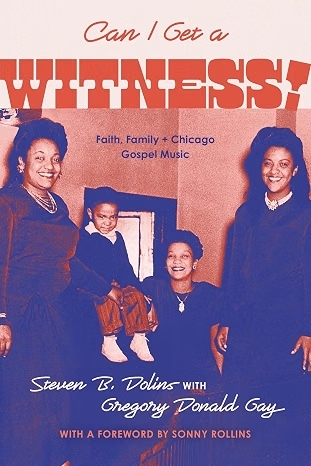
Steven Dolins with Gregory Donald Gay
Genre: Góspel/Biography
Publisher: University Of Chicago Press
328 pages
Price: 30 euros
“Can I Get a Witness! Faith, Family, and Chicago Gospel Music” is a book by Steven B. Dolins and Gregory Donald Gay, published by the University of Chicago Press. The book rebuilds the history of gospel in Chicago through the memories of the Gay family, one of the genre’s most influential dynasties.
The book stands out for its call-and-response format, recreating the dynamics of African American churches. It is not a traditional biography. Instead, it becomes a fluid conversation between producer Steven Dolins -owner of the Chicago record label The Sirens, exclusively specialized in recording piano and organ blues and gospel players-, and Pastor Donald Gay.
The language is clean, straightforward and free of unnecessary academic jargon. It keeps the natural freshness of a chat recorded in a family living room. It also includes previously unpublished family photographs, press clippings and vintage covers.
The narrative is built upon the three fundamental pillars that shaped the lives of the Gay family. Sisters Evelyn, Geraldine and Mildred Gay were pioneers of gospel piano and choral singing. Their music defined the sound of the genre’s “golden age” in the 40’s and 50’s.
Since the age of five, Pastor Donald Gay, the book’s co-author, toured the country singing and he even performed at the prestigious Carnegie Hall. The story details the founding of his own church in Chicago’s Woodlawn neighborhood, a space that served both as a sanctuary and a social center.
The book is not just a tribute; it harshly exposes the difficulties faced by Black artists of the era. It describes how record companies took copyrights money and paid miserable sums for recordings that sold thousands of copies.
This volume also shows the danger of traveling through southern USA during the period that Jim Crow’s laws prevailed, a time when they could not stay on standard hotels and restaurants. Likewise, it shows the natural stress on a family that shared music business, religious ministry and daily life under the same roof.
A strong point of the book is the Gay family’s network of connections to the history of American music. It details rich, first-hand interesting anecdotes involving such legendary names as Mahalia Jackson, Albertina Walker and a young Sam Cooke. It movingly tells how the family welcomed jazz sax player Sonny Rollins into their church during his years of spiritual crisis and addiction.
“Can I Get a Witness! Faith, Family…” explains how the Gay Sisters’ energetic piano style influenced later artists who moved from gospel to secular music, such as Aretha Franklin, who crossed over from gospel to soul.
The book works as a first-rate historical document written in totally accessible way. It avoids cheap nostalgia and focuses on facts, songs, and people. It is the chronicle of a family that, despite being ripped off by industry and sadly forgotten by the general audience, kept its dignity through faith, music and community support.
Vicente Zúmel